Seven Dutch political parties founded the Netherlands Institute for Multiparty Democracy (NIMD) in 2000 in order to assist political parties in new and developing democracies and to deepen and sustain young political systems. The NIMD example has been an inspiration for political leaders seeking to work together and engage in constructive political dialogue, especially in countries where the political environment is highly polarised and little trust exists between politicians and political parties.
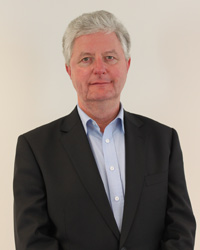
We interviewed Mr. Hans Bruning, the executive director of NIMD and EPD’s chair of the board of directors, on how he sees the role of EPD and NIMD in the sphere of democracy assistance.
1. What is the added value of the Community of Practice and why is it useful in the realm of democracy assistance?
Democracy assistance practices are more efficient when they are shared in a likeminded community, instead of working in splendid isolation. Working in a community is needed in order to exchange experiences and knowledge and to learn from one other. Democracy assistance is mainly practiced on a country and local level. Without communities it could easily lead to a narrow minded focus on the country itself without having an idea on practices elsewhere.
2. What does NIMD bring into the Community of Practice, and what is NIMD’s strategic orientation for the year to come?
Over the years, NIMD has gained experience in almost 30 countries and is nowadays working with its partners in more than 20 countries on all continents. We can bring in a lot of experience but we also want to learn from others. NIMD is experienced in setting up dialogues between political parties and broader political dialogues if needed. NIMD has worked a lot in supporting political parties and their actors in terms of strategizing, writing manifesto’s, political education and so on.
Our strategy for the next years is: to further build on this interparty dialogue; to strengthen old and consolidate new networks; to align the democracy and governance agenda to other interesting development sectors; to contribute to the innovation and renewal of political parties; and to invest in the post 2015 (UN-)agenda, in order to stand up for governance and democracy being at the heart of development.
3. As the chair of EPD’s board of directors, what are your personal objectives and ambitions?
EPD is a well-known and respected partner and player in the field of democracy assistance. We will improve this position in extending the partnership to new partners to make EPD more sustainable and visible. EPD aims to be the true democracy assistance practitioners network on a European level. Together with the staff and the board of EPD I hope to contribute to these ambitions.